
Doing the Right Things: Strategy and Direction
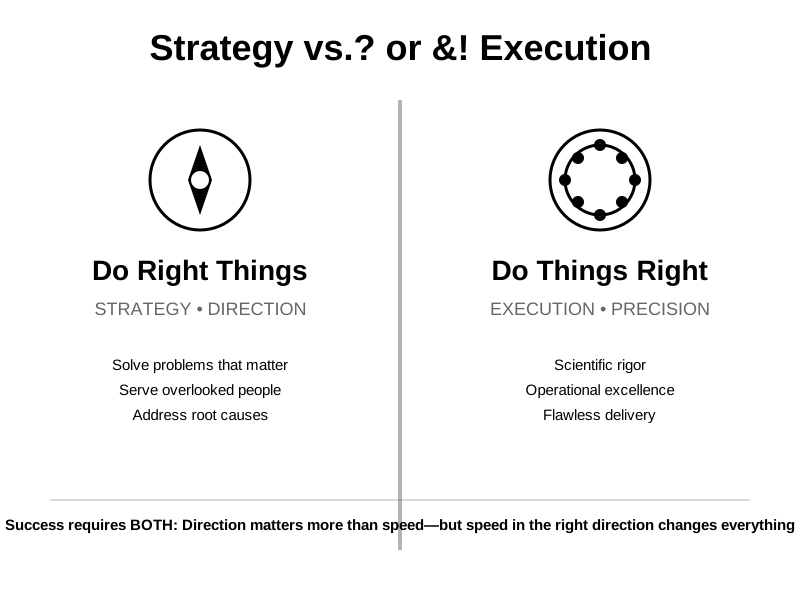
Doing the right things is about direction. It’s asking whether we’re solving problems that matter, serving people who’ve been overlooked, and addressing root causes instead of symptoms. It’s the strategic choice to treat obesity as a legitimate medical condition rather than a moral failing.Novo Nordisk identified the right problem:
– Market expansion: After Ozempic success, now targeting patients who prefer pills over needles opened a massive addressable market. – Sustained engagement: A daily pill eliminates injection barriers, driving consistent use and long-term adherence. – Medical legitimacy: Positioning obesity treatment as healthcare, not cosmetics In March 2024, the FDA approved Wegovy to reduce major adverse cardiovascular events (MACE), making it the only weight-management therapy that also prevents heart attacks. This wasn’t just about weight loss—it was about saving lives3.Doing Things Right: Execution Excellence
But strategy without execution is just aspiration. Doing things right is about precision, rigor, and operational excellence. It’s Novo Nordisk’s scientific discipline in developing an oral GLP-1 medication, navigating complex clinical trials, and executing a flawless regulatory pathway. It’s the operational brilliance of bringing a pill to market and strengthen market share and sales. As their “Believe On” campaign demonstrates: “It takes a different tone. It focuses more on the journeys that people go through and the challenges that they face.” The execution matched the strategy—human-centered, empathetic, medically credible.3The Tension That Drives Success
The most successful organizations hold both imperatives in creative tension. They don’t sacrifice doing the right things for efficiency, nor excuse poor execution with noble intentions. They recognize that direction matters more than speed—but speed in the right direction changes everything.Patient Jobs-to-Be-Done: The Common Thread
The insight that unites strategy and execution? Start with the patient’s “job-to-be-done” (Christensen, 2003). Don’t market the molecule; market the outcome the patient is hiring the drug to deliver.4-6 The data tells the story4-6: – 26% of Americans plan to use a GLP-1 drug to hit 2025 wellness goals—with “look and feel better” as the leading reason, not diabetes management – Wegovy prescriptions for adolescents rose 50% from 2023 to 2025, driven by weight-loss goals rather than glycemic control – Non-medical creators dominate GLP-1 content on TikTok, where posts framed around lifestyle outcomes earn the highest engagementIn Summary – Direction first. Execution always. Both, relentlessly.
References: 1. American Medical Association. (2013). Resolution 420 (A-13): Recognition of Obesity as a Disease. Adopted at the AMA Annual Meeting. 2. McCall, K. (2024, May 15). Campaign of the week: Novo Nordisk’s ‘The Power of Wegovy’ targets HCPs to treat obesity. MMM Online. https://www.mmm-online.com/home/channel/campaigns/campaign-of-the-week/novo-nordisk-wegovy-campaign-hcps-treat-obesity/. 3. Christensen, C. M., Grossman, J. H., & Hwang, J. (2003). The innovator’s prescription: A disruptive solution for health care. McGraw-Hill. 4. Duffy, C. (2024, December 23). Wegovy-maker Novo Nordisk shares surge after GLP-1 pill approval. CNBC. https://www.cnbc.com/2024/12/23/wegovy-maker-novo-nordisk-shares-surge-after-glp-1-pill-approval.html. 5. Sundar, S., & Singhal, V. (2025, October 31). How Ozempic and GLP-1s are changing childhood and teen weight management. Think Global Health. https://www.thinkglobalhealth.org/article/how-ozempic-and-glp-1s-are-changing-childhood-and-teen-weight-management. 6. Lee, J. (2024, December 4). 26% plan to include GLP-1 meds in 2025 goals, led by 37% of Gen Z. Tebra. https://www.tebra.com/theintake/healthcare-reports/weight-loss-medications-and-wellness-resolutions. 7. Lee, S., Narula, N., Weglarz, M., Lee, J., & Kim, D. (2025). Evaluation of social media videos on weight-loss surgery and GLP-1 agonists: A content quality and reliability analysis. Surgical Endoscopy, 39(9), 6032–6036. https://doi.org/10.1007/s00464-025-11938-4